Structure and Health Improved Through Selective Cutting
Tree Pruning in La Valle for properties where preventive maintenance reduces storm damage and improves canopy form
Weather events across rural Wisconsin regularly break weak limbs and split poorly attached branches, leaving trees damaged and properties littered with fallen wood. Preventive pruning removes structurally weak growth before storms exploit those failure points, reducing the likelihood of major breakage during high winds or ice loading. Cut And Run Tree Service LLC prunes trees following arboricultural standards that prioritize long-term health and structural integrity across properties in La Valle, Richland Center, and Baraboo where storm exposure is common and mature trees dominate residential lots.
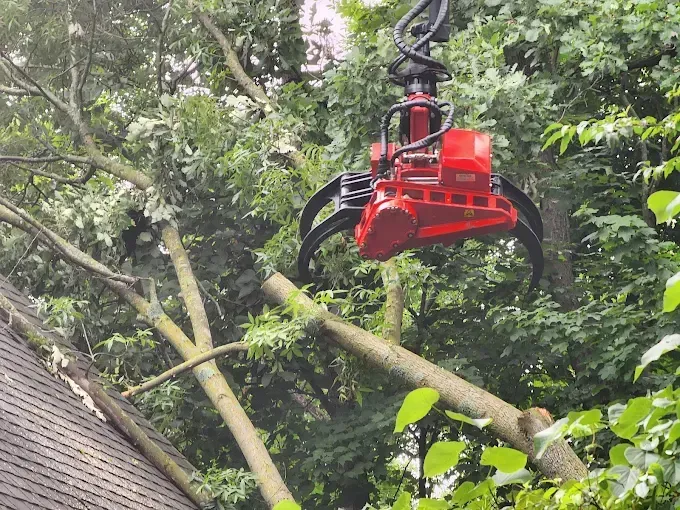
The process involves selective limb removal to improve branch spacing, eliminate co-dominant stems that compete for dominance, and reduce end-weight on long horizontal branches prone to breakage. Cuts are made just outside the branch collar to preserve the tree's natural wound response, and pruning targets specific structural issues rather than reducing overall canopy size.
Arrange a property assessment to identify structural weaknesses and prioritize pruning cuts that enhance tree stability.
Why Proper Pruning Follows Growth Standards
Pruning removes branches with narrow attachment angles that are likely to tear under load, limbs showing bark inclusions where weak unions have formed, and growth that creates imbalanced weight distribution in the canopy. The goal is to establish a central leader in young trees and maintain dominant scaffold branches in mature specimens, creating a structure that withstands wind and ice without catastrophic failure. Dead wood is removed to prevent decay from spreading into healthy tissue.
After pruning, you'll notice the canopy looks more open with better light penetration, branch spacing is uniform without limbs crowding each other, and the tree has a defined central structure rather than multiple competing trunks. Properties experience fewer broken branches during storms because weak attachments have been eliminated before they fail. The work enhances tree appearance while extending lifespan by removing stress points that would otherwise lead to progressive decline.
Pruning complements removal and emergency services by maintaining trees that are otherwise healthy but require structural correction. Clients often schedule pruning after purchasing properties where trees have been neglected for years, using the work to bring canopies back into manageable condition before decay or storm damage creates more serious issues.
What Property Owners Usually Ask
Understanding the difference between pruning and trimming helps clarify what the service accomplishes and when it's appropriate.
What makes pruning different from basic trimming?
Pruning follows arboricultural standards focused on tree health and structural development, using selective cuts to improve branch angles and weight distribution, while trimming emphasizes clearance and obstruction removal for property management without the same focus on long-term tree form.
How much does professional tree pruning cost in La Valle?
Pricing depends on tree size, canopy density, and the number of structural corrections needed, with larger trees requiring more climbing time and labor to address co-dominant stems, weak unions, and imbalanced growth throughout the canopy.
When should pruning be scheduled to minimize stress on the tree?
Late winter before bud break is optimal for most species because wound closure begins immediately as spring growth starts, though hazardous or structurally compromised limbs are pruned year-round when failure risk outweighs dormant-season timing.
What happens if a tree has co-dominant stems?
Co-dominant stems are pruned by removing the weaker of the two competing leaders to establish a single dominant trunk, preventing the bark inclusion and weak union that commonly cause storm-related splitting in mature trees with dual leaders.
How often should trees be pruned in South Central Wisconsin?
Most trees benefit from structural pruning every five to seven years, with young trees pruned more frequently to establish proper form and mature trees pruned as needed to address storm damage, deadwood accumulation, or structural issues that develop over time.
Cut And Run Tree Service LLC provides maintenance-focused pruning that supports tree health across the established service territory. Contact the crew to schedule work that addresses structural concerns and reduces future storm damage risk on your property.